
Boat Licence in Spain:
Which One Do You Need?
Do You Need a Boat Licence in Spain?
Spanish regulations allow certain small boats to be operated without a licence under specific conditions. However, these exemptions do not apply to bareboat rental.
If you already hold a boating certificate issued in another country, you may be able to use it in Spain. Recognition depends on factors such as your nationality or residency, the issuing country and the vessel’s registration.
If you don’t already have a recognised qualification, the Spanish Navigation Licence is one of the most accessible options and can be obtained through training delivered in English at participating schools.
Can You Drive a Boat in Spain Without a Licence?
Spanish regulations allow certain small recreational boats to be operated without a boating qualification, but only under specific conditions.
For private use, motorboats up to 5 metres in length and with a maximum engine power of 15 hp may be operated without a licence. Sailing boats up to 6 metres are also exempt when used for sporting purposes.
These exceptions apply to daytime navigation within 2 nautical miles of the departure port, marina or beach, and the skipper must generally be at least 18 years old.
Since 1 October 2026, these exemptions no longer cover bareboat rental. If you want to hire a boat without a professional skipper, you must hold an appropriate qualification. Jet skis are also excluded from these exemptions.
Types of Boat Licences in Spain
Each qualification allows you to operate certain types of vessels within specific limits. The right choice depends on the boat you want to skipper, how far you plan to sail and whether you need additional sailing privileges.
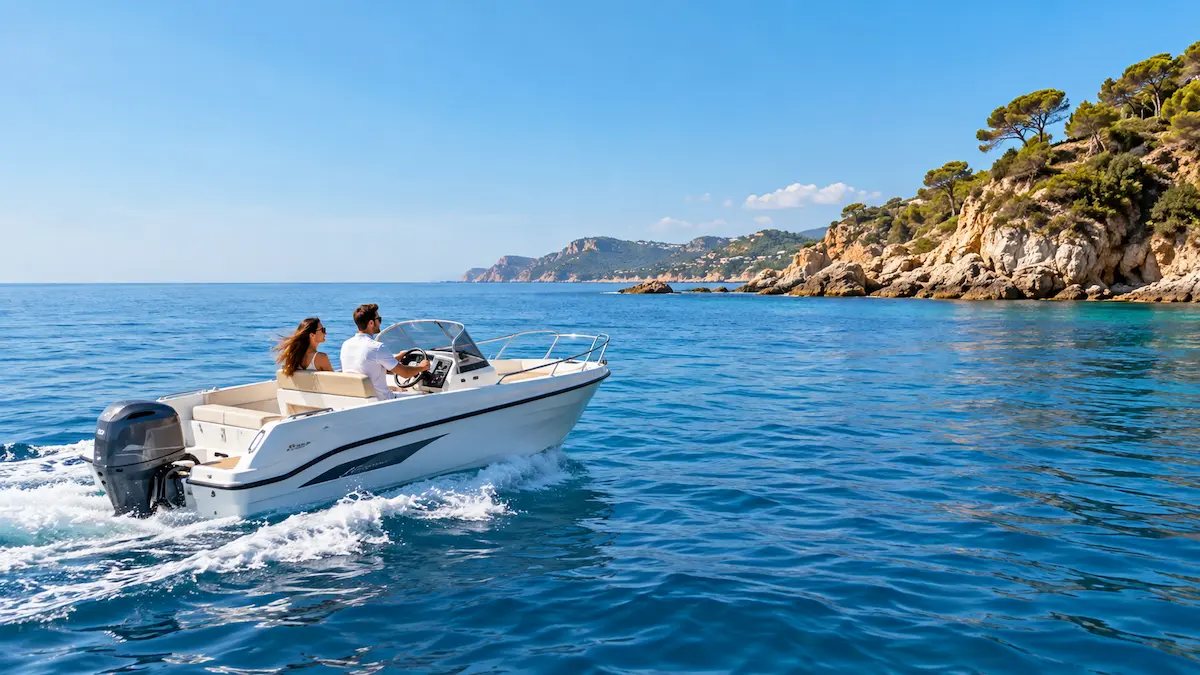
Licencia de Navegación (LN)
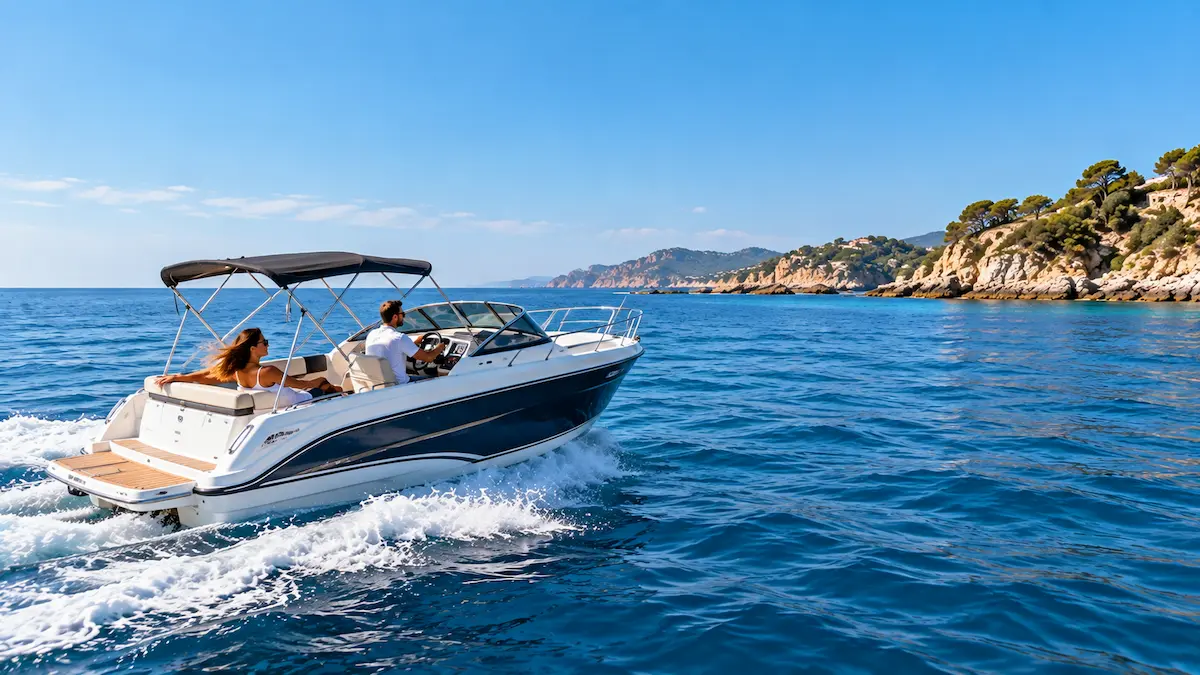
Patrón para Navegación Básica (PNB)
The official examination is conducted in Spanish.
Patrón de Embarcaciones de Recreo (PER)
Additional training can extend its privileges. The official examination is conducted in Spanish.
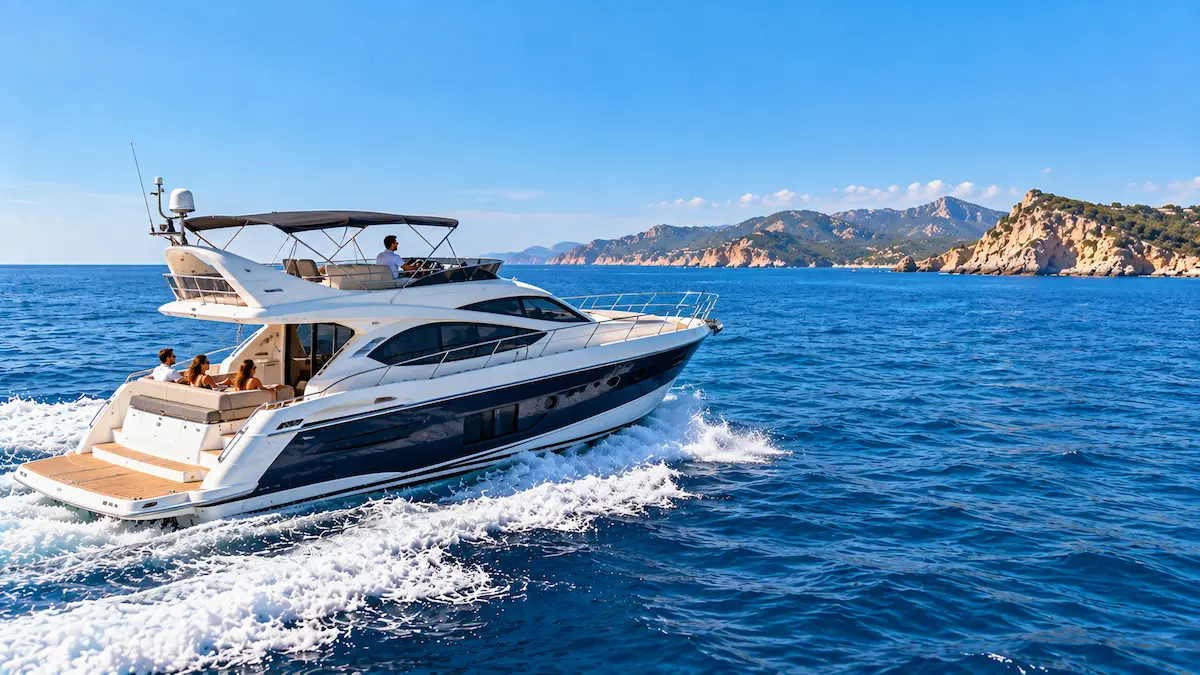
Patrón de Yate (PY)
You must already hold the PER qualification and pass an official examination in Spanish.
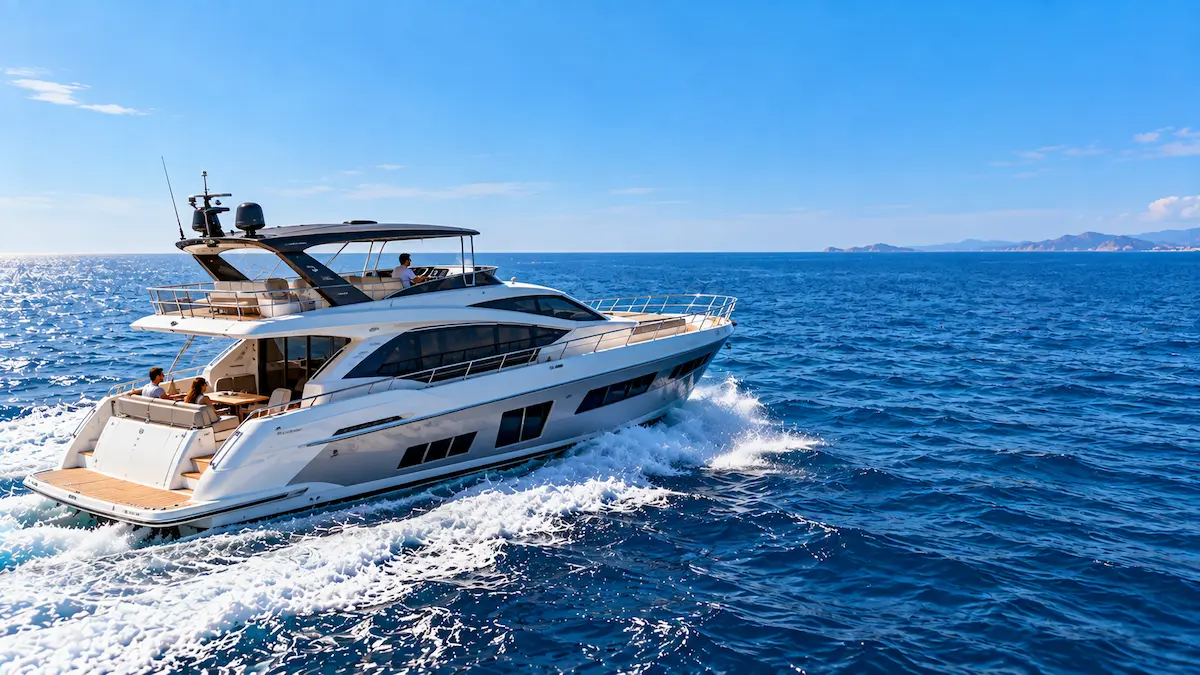
Capitán de Yate (CY)
You must already hold the Patrón de Yate qualification and pass an official examination in Spanish.
How to Get a Boat Licence in Spain
1. Choose the Right Boating Qualification
2. Check the Entry Requirements
3. Complete the Required Training
More advanced Spanish qualifications involve additional theoretical preparation and practical training, depending on the licence.
4. Pass the Official Exam, If Required
Higher Spanish boating qualifications, including the PNB and PER, require official examinations conducted in Spanish.
5. Apply for Your Qualification
For higher qualifications, the process also involves passing the required examinations and completing the relevant administrative procedures.
Not sure where to begin? A Toda Proa can help you explore the available courses and training options in Spain.
Can You Get a Spanish Boat Licence in English?
Navigation Licence: A Beginner-Friendly Option
The Spanish Navigation Licence (Licencia de Navegación) is the most accessible option for English-speaking beginners who want to operate small recreational boats in Spain.
The course includes 2 hours of theory and 4 hours of practical training, which can be delivered entirely in English at participating authorised schools. It can usually be completed in one day and does not require an official examination.
This makes it a particularly convenient option for international visitors and residents who want to enjoy recreational boating in Spain without studying for a Spanish-language exam.
Are PNB and PER Courses Available in English?
The PNB and PER are more advanced Spanish recreational boating qualifications, offering greater privileges in terms of vessel size and navigation distance.
Although some schools may provide English-language study materials or additional support, the official examinations are conducted in Spanish. These qualifications should therefore not be considered fully English-language alternatives to the Navigation Licence.
The same language limitation applies to the official examinations for Patrón de Yate and Capitán de Yate.
What If You Don’t Speak Spanish?
If you don’t speak Spanish, you can still obtain a Spanish Navigation Licence through an authorised school that offers the course in English.
Before enrolling, confirm that both the theoretical and practical sessions are available in English and ask the school what identification, medical certificate and other documents you will need.
For larger boats or longer journeys, you will need to consider the qualifications and legal requirements that apply to your intended navigation. The appropriate option depends on the vessel, its registration and how and where you plan to use it.
Not sure which boat licence you need in Spain? Get personalised guidance based on your boating plans, preferred language and the type of vessel you want to operate.
Spanish Boat Licences vs RYA Qualifications
Spanish recreational qualifications are regulated by the Spanish maritime authorities, while RYA qualifications follow a British training and certification framework recognised in many countries.
Understanding the differences is particularly important if you live in Spain, want to charter a boat or already hold a qualification from another country.
← Swipe to compare both systems →
| Aspect | Spanish Boat Licences | RYA Qualifications |
|---|---|---|
| Certification system | Official Spanish recreational boating qualifications regulated by Spanish maritime legislation. | British training and certification framework developed by the Royal Yachting Association. |
| Main qualifications | Licencia de Navegación, PNB, PER, Patrón de Yate and Capitán de Yate. | Day Skipper, Coastal Skipper, Yachtmaster and Powerboat certificates, among others. |
| Training approach | Theory and practical training requirements vary according to the qualification. | Courses combine practical skills and theoretical knowledge, with an emphasis on developing skippering competence. |
| Exams and assessment | Some qualifications require an official theory exam. The basic Navigation Licence does not. | Assessment depends on the certificate. Some courses use continuous assessment, while others require a separate practical examination. |
| Language | Mainly Spanish. English-language training may be available, depending on the school and qualification. | Commonly taught in English, although available languages depend on the training centre. |
| Recognition in Spain | Provides the recreational boating privileges established under Spanish regulations for each qualification. | Acceptance depends on the specific certificate and the circumstances of navigation. It is not automatically equivalent to a Spanish licence. |
| International use | Use outside Spain depends on the destination country’s rules and the intended activity. | Widely known internationally, but legal acceptance varies between countries and boating activities. |
| Which should you choose? | Particularly relevant if you need a qualification governed by Spanish law for recreational boating in Spain. | Worth considering for structured practical training and international sailing goals, after checking recognition for your intended use. |
Important: This table provides a general comparison of Spanish recreational boating licences and RYA qualifications. It does not establish legal equivalence between certificates. Recognition and permitted activities depend on the specific qualification, the vessel, the skipper’s circumstances and applicable regulations.
Is an RYA Certificate Equivalent to a Spanish Boat Licence?
Whether a foreign certificate can be used in Spain depends on factors such as the specific qualification, the skipper’s nationality or residence, the vessel’s flag and whether the boat is privately operated or chartered.
Before choosing a course, it’s important to establish where and how you intend to use your qualification.
Which Boat Licence is Right for You?
Here are some common situations to help you narrow down your choices.
I Want to Drive a Small Motorboat
For short daytime trips, the Spanish Navigation Licence (LN) may be sufficient. It covers motorboats up to 6 metres within 2 nautical miles of a port or place of shelter, and training is available in English at participating schools.
I Want to Skipper a Sailing Yacht
Sailing larger yachts in Spain generally requires an appropriate qualification and sailing privileges. Spanish qualifications such as the PER can include these privileges after additional training, but official examinations are in Spanish.
I Want to Navigate at Night
The basic Navigation Licence only permits daytime navigation. Spanish qualifications such as the PNB and PER allow night navigation within their respective limits and require official examinations in Spanish.
I Want to Make Longer Passages
For longer journeys, explore PER with extended privileges, Patrón de Yate or Capitán de Yate. These Spanish qualifications allow progressively greater navigation distances, but require official examinations in Spanish.
I Already Hold a Foreign Certificate
You may not need another course. Whether your existing boating qualification is accepted in Spain depends on several factors, including your circumstances, the vessel’s registration and your intended navigation.
Not Sure Which Boat Licence You Need in Spain?
Can You Use a Foreign Boat Licence in Spain?
However, acceptance is not automatic. The applicable requirements depend on several factors, including your nationality or residency, the country that issued your qualification, the vessel’s registration and whether the boat is privately owned or rented.
Before navigating, check whether your qualification is accepted for the type of vessel and navigation you have planned. If you intend to rent a boat, the charter company may also need to verify your documentation and boating privileges.
If your existing qualification is not suitable for your plans, you may need to obtain an appropriate Spanish boating licence.
What About the International Certificate of Competence (ICC)?
The International Certificate for Operators of Pleasure Craft (ICC) is a document used to demonstrate boating competence in certain countries.
However, the ICC is not a universal boating licence and is not automatically accepted in every situation in Spain. Whether it can be used depends on the vessel’s registration, the skipper’s circumstances and the applicable regulations.
Before relying on an ICC to navigate or charter a boat in Spain, check that it is accepted for your intended use.
What if You Want to Charter a Boat in Spain?
If you plan to rent a boat in Spain without a professional skipper, the charter company will need to verify that you hold an appropriate boating qualification for the vessel and navigation area.
For Spanish-registered charter boats, specific requirements may apply to foreign certificates. Factors such as the issuing country, your nationality or residence and the privileges granted by your qualification can affect whether it is accepted.
Before booking a boat, always confirm with the charter company that your certificate meets the applicable requirements.
Find a Boating Course in Spain
Looking for a boating course in Spain? A Toda Proa helps you explore training options based on your experience, preferred language and the type of boat you want to operate.
If you’re looking for a Spanish Navigation Licence, we can help you find authorised nautical schools offering English-language training in your preferred location.
Tell us about your boating plans and we’ll help you identify a suitable course and understand the next steps.
Frequently Asked Questions About Boat Licences in Spain
Can Foreigners Get a Boat Licence in Spain?
Yes. Foreign nationals can obtain Spanish recreational boating qualifications as long as they meet the applicable requirements.
You do not necessarily need to be a Spanish citizen or resident to obtain a Spanish Navigation Licence. However, you must provide the required identification, meet the minimum age requirements, complete the mandatory training and obtain the necessary medical certificate.
What Is the Easiest Boat Licence to Get in Spain?
The Spanish Navigation Licence (Licencia de Navegación) is generally the easiest boating qualification to obtain in Spain.
It requires just 2 hours of theoretical instruction and 4 hours of practical training, with no official examination. At participating authorised schools, the entire course can be completed in English in a single day.
How Long Does It Take to Get a Boat Licence in Spain?
It depends on the qualification. The Spanish Navigation Licence requires 6 hours of mandatory training and can usually be completed in one day.
More advanced qualifications, such as PNB and PER, take longer because they involve theoretical preparation, official examinations and additional practical training. The overall time required depends on the course schedule and examination dates.
Can I Get a Spanish Boat Licence Without Taking an Exam?
Yes. The Spanish Navigation Licence does not require an official examination. Instead, you must complete the mandatory theoretical and practical training at an authorised nautical school and meet the applicable requirements.
Higher Spanish qualifications, including PNB, PER, Patrón de Yate and Capitán de Yate, require official examinations.
Do I Need a Sailing Endorsement to Operate a Sailing Yacht?
For Spanish recreational boating qualifications, operating a sailing yacht generally requires the appropriate qualification together with additional practical sailing training.
Qualifications such as PNB and PER can include sailing privileges once the required training has been completed. The permitted vessel size and navigation distance still depend on the qualification held.
Can I Use My Spanish Boat Licence Outside Spain?
Spanish recreational boating qualifications may be accepted in other countries, but recognition is not automatic.
Whether you can use your licence abroad depends on the destination country’s regulations, the vessel’s registration and the type of navigation you intend to undertake.
Before travelling or renting a boat abroad, always check the local requirements and confirm that your qualification is accepted.
Can I Get a Spanish Navigation Licence in English?
Yes. Some authorised nautical schools in Spain offer the Spanish Navigation Licence with both theoretical and practical training delivered in English.
The course requires 2 hours of theory and 4 hours of practical training, with no official examination. Availability depends on the school and location, so you should confirm that English-language instruction is offered before enrolling.